Growing Buckwheat
By Penny Ossowski
Buckwheat
is another great food I thank my Polish friend for introducing me to.
Buckwheat is a tasty, textured alternative to rice or pasta and just as
easy to cook. I started to research growing buckwheat after reading how
it attracts beneficial insects. I have decided to grow some in my garden
and experiment with it.
Some reasons to grow Buckwheat include:
- useful as cover crop as it grows so fast it smothers weeds
- will grow in poor soils
- not susceptible to any major disease or pest problems
- a fast easy to grow green manure crop
- suppresses weeds, and adds bulk to the compost
- able to take up soil phosphorus and return it in a more plant-friendly form
- growing buckwheat nearby can deter pests of potato, broccoli, green beans, and other vegetable crops
- a nectar source for bees
- attracts beneficial insects such as hoverflies, lacewings, pollinators and parasitic wasps to your garden
- its fibrous root system prevents erosion from rain and wind
- easy to grow, harvest, and process
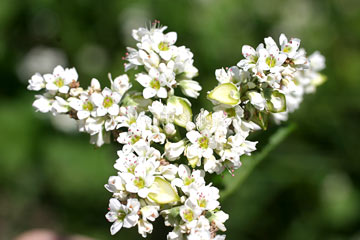
Buckwheat, Fagopyrum esculentum,
is not wheat or a relation of wheat, it is not even a grain, it is the
fruit/seed of a plant actually related to rhubarb and sorrel. It is so
high in protein that it is sometimes called ‘meat of the fields’.
Buckwheat was first cultivated in south-east Asia around 6000BCE, their
traders transported it to the Middle East and Europe and it was first
grown in Australia in the 1980’s, as a result of demand from European
migrants.
I am planting some now as research
I’ve done indicates it can be grown at any time when there is no frost
but in extremely hot weather it will not produce as many flowers or
fruit/seeds. To grow some buckwheat soil needs very little if any
preparation but digging in a fertiliser similar to Organic Xtra before
planting will produce a better crop but don’t use a high in nitrogen
fertiliser. Buckwheat will grow in all soil types and a wide range of pH
levels but does best with a pH 6-7. Select a site that gets sun for
most of the day and is well drained. Plant seed about 1-2 cm deep either
by broadcasting then raking over or plant in shallow furrows then fill
in over seed. Give a light watering either before or after planting and
keep soil damp until germination. Buckwheat will not tolerate cold or
water logging. Seed will germinate in less than a week.
In ideal conditions buckwheat can be blooming in less than a month.
From an article by Barbara Pleasant ‘Throughout the summer, I sow
buckwheat in any spot bigger than a dinner plate that won’t be planted
for a few weeks’. If growing as a green manure crop, a week after the
first flower appears slide a sharp spade under it and turn it over,
leave for a few weeks before digging in and planting your next crop.
Poor soil can be greatly improved with a green crop of buckwheat. If you
are growing as an insect attractor let it go to flower and seed. If you
are growing for saving/harvesting the seed it will probably take about
12 weeks. When most of the seeds become dark brown cut the stems near
the ground. Thresh the buckwheat by laying them on a clean sheet and
beating them with a broom. When as many seeds as possible have been
removed, the husks can be removed by putting them in front of a fan a
couple of times. Your buckwheat is then ready to grind the seeds. The
easiest way is probably in a food processor. Buckwheat is not only good
to eat but good to grow and if allowed to set seed it will often
self-sow readily next season.
Uses for buckwheat include:
- seeds can be used to make sprouts for salad
- high protein leaves can be used like spinach
- buckwheat tea
- hulls can be used as filling for a variety of upholstered goods, pillows and zafu
- buckwheat has been used as a substitute for other grains in gluten-free beer
- buckwheat-only whisky
- as ‘groats’ to make porridge
- buckwheat honey, apparently it has a symbiotic relationship with bees
- use as feed for livestock
Buckwheat is a source of high quality protein, amino acids and
vitamins. And it said to aid in the control of high blood pressure and
cholesterol. If you have a little or larger space in your garden plant
some buckwheat, it will be of great benefit to your garden.
 circumvolution